
Pocket Money Adventures · National Year of Reading 2026
Read, Talk, Choose
Read a story. Talk about it. Choose what to read next. Twenty-five free stories for four to seven year olds and whoever is reading with them, and forty library books at the end of them.
Where we are: Pocket Money Adventures CIC has submitted Read, Talk, Choose as its proposed contribution to the National Year of Reading 2026. We are not yet a listed Pledge Partner. Nothing on this page is endorsed by the National Literacy Trust or the Department for Education.
The free thing on this page
Ten Minutes in Silverton
The National Year of Reading’s idea is simple: if you’re into it, read into it. So: pick what you’re into, and the name is the method. Read a Silverton story together — about four hundred words, three minutes out loud, with a line in the middle for the child to read themselves. Talk — three things to find in it, and one question worth asking. Choose — five books to borrow from your library, none of them ours.
About ten minutes. Free, works on any phone, and it saves nothing — no account, no analytics, no cookies. You will not need us again to do it.
Pick what you're into
Tap the one you like best. You can come back and pick another any time.
Twenty-five stories live in here, and forty library books to read next. Nobody is counted, scored or remembered. See all the stories.
How to read this with them
Ask, listen, add a bit, ask again. That is the whole technique and it is worth more than any resource.
Two things nearly everybody does by accident: asking questions that can be answered yes or no, and filling the silence too quickly. Leave the gap. Count to five in your head if you have to. They are thinking.
The yellow line is theirs. Read it first yourself, let them echo it, then say it together. Nobody is being tested and there is no wrong way to join in.
Look back at the story
Can you find these three?
No reading needed. Point at them, say them, or find them in the pictures in your head.
Answers, if you missed one
And one thing to talk about
There is no right answer, and passing is a real answer. If they would rather draw it or point at it, that counts too.
That is your ten minutes.
You read a story together, you talked about it, and now you choose what comes next. Read, talk, choose. That is the whole thing, and it counts.
Now the important bit
Five to borrow from the library
Nothing here is ours and we make nothing from any of it. Ask at the desk, or reserve them online. If your library has not got one, they can usually get it.
Ask for a wordless picture book too — Journey by Aaron Becker is a good one. They work beautifully if reading aloud is hard for you, because there is nothing to read.
Do not own a library card?
Joining is free, takes about five minutes, and a child can have their own card from the day they are born. Search for your council's name and "library membership".
Or go somewhere else in Silverton
Tap. Tap. Pause.
This is the routine from the book, and it is where Pocket Money Adventures came from. It is nothing to do with reading, so skip it freely. Some families like it and some do not.
Tap once, on either wrist. “Do I need it, or do I want it?”
Tap again, so you notice. “If I get it now, what can’t I get later?”
Pause. Take one breath, then choose whether to save, spend or share some, if sharing is possible.
Prefer not to tap? Take a breath, touch a pause card, or use another cue you agree together. Either wrist is fine and the place has no special effect. Keep the two questions and the pause.
Then ask, about the character
The reason matters more than the answer.
Mum's rule, from the story
Save some. Spend some. Share some if you can.
Ava has ten pretend coins. Any split works. Sharing is an invitation, never a rule — a jar left on zero is a perfectly good answer.
SAVE
Keep some for later
0SPEND
Use some now
0SHARE
Help or enjoy something with someone else
A pause before you choose
Tap. Tap. Pause.
One small routine, taught the same way at school and at home. Two taps are two questions. The pause is a breath and a decision. It is a brief physical reminder to stop and think before a money choice — nothing more than that. It is not a therapeutic technique, and we claim no effect on how anyone behaves.
Tap once
On either wrist.Do I need it, or do I want it?
Tap again
So you notice.If I get it now, what can’t I get later?
Pause
Take one breath. Then choose whether to save, spend or share some, if sharing is possible.
Prefer not to tap? Take a breath, touch a pause card, or use another cue you agree together. The tap is never compulsory and either wrist is fine — the place has no special effect. Keep the two questions and the pause; the gesture is the part you can change.
Save some. Spend some. Share some if you can.
Mum’s rule from the story. Three things money can do, not three marks out of three. Saving is not automatically the right answer, spending can be a good choice when it is meant, and sharing is an invitation, never a requirement. Some children have very little to share, and nothing here should make that feel like a failure.
What we have pledged
Five promises, September to December 2026
Written so anybody can check them afterwards.
- Ten shared-reading activities, free to take part in. At least six of them in Staffordshire and Stoke-on-Trent libraries, the rest through primary schools, Family Hubs and community settings.
- At least 300 children and 100 adults. Parents, carers, teachers and practitioners, counted as people who actually turned up rather than places we were booked into.
- The free Read, Talk, Choose activity, for anyone in the UK. Twenty-five stories and two printed pages, no login, no purchase, no special equipment. Every strand ends with five library books that are not ours and make us nothing. It is already on this page.
- Take 10 to Read, 10 October. Our own ten minutes at 10am on the day, and an open invitation to any Staffordshire setting that wants to join in — on the Saturday itself, or on the Friday or Monday either side of it.
- An honest write-up. What we delivered, who came, what worked, what did not, and what we would change. Published here whether it flatters us or not. It will contain no download or visitor figures for this page, because we chose to build it so that no such figure can exist.
Where we have actually got to
These numbers move when something has genuinely happened, and not before. Right now they are zeros, because the programme starts this term.
Last updated 6 September 2026.
Two things we want to be straight about
This is a pilot, and it is built to outlive the year
Three hundred children over four months is a pilot with a write-up, not a national contribution, and we would rather say so now than let anyone infer otherwise in January. The sessions are the evidence half. The stories and the printable are the half that scales, and they carry no dates, no campaign branding and no expiry — they work just as well in 2027, which is the point.
Early years is the best-served part of this campaign, not a gap: BookTrust leads it and reaches hundreds of thousands of families. What we think we can add is narrower. Take 10 to Read has a schools offer for ages five to fourteen and an early years partner below us. The Reception-to-Year-2 shared-reading version of that same ten-minute shape is the seam we are trying to fill, without duplicating anybody.
Saturday 10 October 2026
Take 10 to Read
Take 10 to Read is the National Literacy Trust’s call to drop everything and read for ten minutes on 10 October, World Mental Health Day. It does not have to be a book. A comic, a recipe, a match report or the back of a cereal packet all count.
What we are doing
Our own ten minutes at 10am on the day. Ten Minutes in Silverton is built to fit exactly inside it, and the printable works with no screen at all.
It falls on a Saturday in 2026. Libraries, Family Hubs and community groups can run it on the day. Schools are welcome to take their ten minutes on Friday 9 or Monday 12 October instead.
In Staffordshire and want to do it alongside us? Say so in the form below and we will sort the details.
For schools, libraries, Family Hubs and community groups
Host a reading moment
Free to the children and families taking part. We bring the story and the printed activity. You provide the room and a member of your own staff, who stays throughout and keeps responsibility for the children.
Free, for anyone, anywhere in the UK
Read, Talk, Choose — the paper version
Two pages of A4. One for the child, one for the grown-up. Print it, photocopy it for a whole class, put it in a book bag or leave a pile of them on a library table. No login, no email address, no purchase.
- The routine, drawn in three steps, with the non-tapping alternative
- A needs, wants and “it depends” sort you can cut out
- Mum’s rule and a blank money-band to fill in
- Five things to talk about, and a space to recommend a story to somebody else
- Eight books to borrow from your library. None of them are ours.
What we have seen so far
Honestly, and not more than that
Pocket Money Adventures has run story-led sessions in primary schools in Staffordshire and Stoke-on-Trent. We are deliberately not publishing outcome percentages here. Our earliest figures came from a teacher-administered rating of single classes with no comparison group; that instrument was retired in August 2026 and the current pilot uses new measures. What we can share is what two members of staff told us.
“The programme was low-preparation and easy to fit around a busy timetable.”
A senior leader at a partner primary school · quoted with permission“Parents have been doing the activities at home.”
A KS1 lead at a partner school · quoted with permissionTwo people, describing their own schools. We do not claim the routine becomes a habit, changes what anybody does with money, or protects anyone from anything later on. When we have evidence that stands up, we will publish that instead.
Bold with Feelings.
Smart with Money.
Where Silverton comes from
Ava Saves Up!
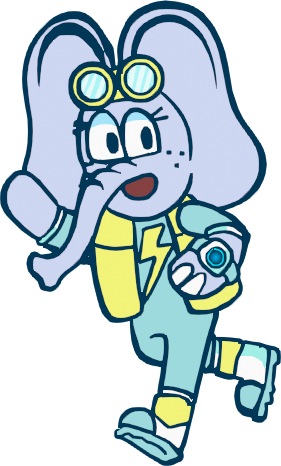
In Silverton, the City of Speed, seven-year-old Ava wants one thing: to win the Silverton Speed Cup. Then Zion turns up in brand-new SUPER SPEED TRAINERS, her money-band says zero, and the race is in three days. With Walbot the robot and Mum’s simple money trick, Ava finds out how to stop, think and choose.
You do not need to own or buy the book to use anything on this page. Every free thing here works on its own. The book is simply where Ava, Walbot and the routine came from, if you would like to read the whole story.
Ask your local library for it too. Libraries are free, and the National Year of Reading is trying to get a million more people using them.
For grown-ups
How we keep this safe
Money can be a difficult subject at home. These are the rules we work to, and they apply to this page as much as to a classroom.
- No child data, at allThe activity saves nothing. No account, no analytics script, no cookies at all, which is why there is no cookie banner. The only thing that ever reaches us is what an adult chooses to type into the enquiry form, and that asks for adult contact details only and tells you not to include any child’s name.
- Every choice belongs to a story characterChildren are never asked what their own family earns, spends, owns or can afford. The decisions in Silverton are Ava’s, Louis’s or Bennie’s. A child can point, draw, answer through an adult, or pass.
- A want is never a wrong answerWe do not treat wanting things as a fault, saving as automatically correct, or having less money as a failure. Sharing is offered as an invitation and is never scored, praised more highly, or expected.
- No score, no streak, no pressureNothing here has a timer, a leaderboard, a wrong-answer noise or a reason to come back tomorrow that we invented. Ten minutes is the whole idea.
- No photographs at these sessionsWe take no photographs or film of children at Read, Talk, Choose activities. Anywhere else, Pocket Money Adventures only ever takes an image with opt-in written consent from a parent or carer, which can be withdrawn at any time, under our Photography, Filming and Image Consent Policy. A child’s full name is never published with an image.
- Free means freeNo purchase is needed for any activity, at any point, and no child ever needs to own the book to take part.
- What every host gets before we comeAn enhanced DBS certificate with barred-list check for each adult attending, our child protection policy, our public liability insurance certificate, the employment status of everyone attending, and the name, role and direct number of our Designated Safeguarding Lead and deputy. Ask and we send them the same day. A setting should not take us on trust and we would not expect it to.
- If a child tells us somethingWe pass it to your Designated Safeguarding Lead the same day. We do not investigate, we do not ask follow-up questions, and we never promise a child that we will keep something secret. Your staff member stays in the room throughout and keeps responsibility for the children.
- A note before you run itEvery story is about a character who wants something they have not got the coins for. That is deliberate, and it is always the character's problem and never the child's. Even so, it is worth a thought about who is in your group, and worth telling whoever leads it that a child may join a story to their own life without being asked to.
Questions: hello@pocketmoneyadventures.co.uk. Safeguarding concerns: support@pocketmoneyadventures.co.uk. Full detail on the privacy page and the accessibility page.